
TOURISM IN UGANDA
Tourism in Uganda : Uganda is a landlocked country in East Africa whose diverse landscape encompasses the snow-capped Rwenzori Mountains and immense Lake Victoria. Its abundant wildlife includes chimpanzees as well as rare birds. Remote Bwindi Impenetrable National Park is a renowned mountain gorilla sanctuary. Murchison Falls National Park in the northwest is known for its 43m-tall waterfall and wildlife such as hippos and Uganda’s tourism includes; Uganda Wildlife Authority, (UWA) manages 10 National Parks; 12 Wildlife reserves; 5 Community Wildlife Management Areas; and 13 Wildlife Sanctuaries.
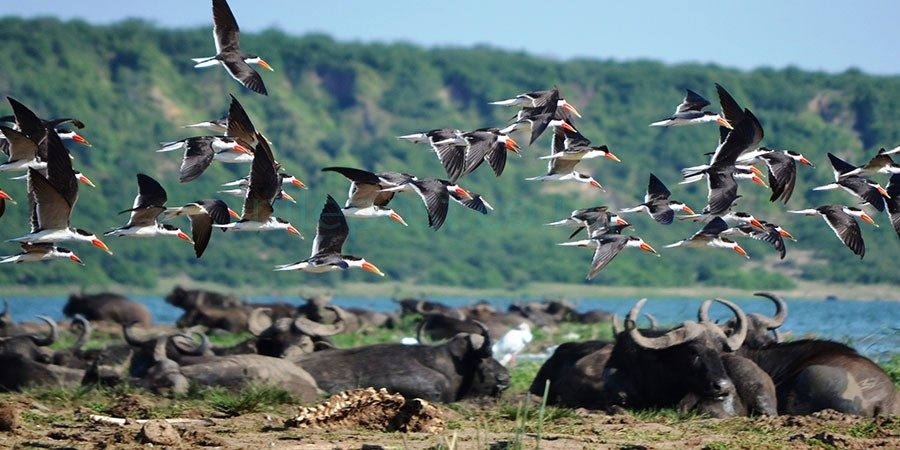
The ten National Parks including Queen Elizabeth, Lake Mburo, Murchison Falls, Kidepo Valley, Kibale, Mount Elgon, Rwenzori Mountains, Semuliki, Mgahinga Gorilla and Bwindi Impenetrable National Parks. These parks display the best in East Africa. Their Rift Valley landscapes and tropical forests make dramatic backdrops to an extensive variety of flora and fauna. The parks offer ‘traditional’ savanna safaris along with boat tours, forest hikes, mountain climbing and wildlife research activities. Uganda is unrivalled on the continent as a bird-watching destination with over 1,000 species of birds – several of which are found nowhere else on the planet. It is also home to 13 types of primates including over half of the world’s endangered Mountain Gorillas; and our closest relative – the chimpanzee. to enjoy while enjoying Tourism in Uganda
Explore the wild Kidepo Valley; spot Queen Elizabeth’s tree-climbing lions; trek up the Virunga Volcanoes; summit the snow-capped Rwenzori Mountains; take on Bwindi’s “impenetrable forest”; learn ancient tribal traditions and crafts – or just relax at your lodge surrounded by the wonderful sights and sounds of Africa’s most hospitable destination.
Uganda is a well-watered country. Nearly one-fifth of the total area, or 44,000 square kilometers, is open water or swampland. Four of East Africa’s Great Lakes–Lake Victoria, Lake Kyoga, Lake Albert, and Lake Edward–lie within Uganda or on its borders. Lake Victoria dominates the southeastern corner of the nation, with almost one-half of its 10,200-square-kilometer area lying inside Ugandan territory. It is the second largest inland freshwater lake in the world (after Lake Superior), and it feeds the upper waters of the Nile River, which is referred to in this region as the Victoria Nile.
Whenever one thinks of visiting Uganda, the first thing that comes to mind are the wildlife and mountain gorillas in particular on Gorilla Trekking safaris. Cultural tours are last on the bucket list when tourists are making a decision about visiting Uganda. Uganda is also a country with a strong cultural heritage. This is demonstrated by the numerous cultural sites and tribes in the country. To be more specific, there are 65 tribes in Uganda including the Acholi, Alur, Bafumbira, Baganda, Bagishu, Bagwere, Bakiga, Bamba, Banyoro, Banyuli, Bateso, Batooro, Batwa, Jonam, Karamojong, Kumam, Langi, Lugbra, Madi, Jopadhola and Tepeth. Each group has its own unique language, cultural practices and norms. Most have a traditional King or chief as head. There was a time when these Kingdoms and Chiefdoms wielded so much power and influence that the presidents then decided to abolish them. It was only about 30 years ago that the president revived them. On a cultural tour, visitors have an opportunity to understand the culture of these indigenous groups by visiting a family or attending their cultural performances.

Cultural tours in Uganda – Cultural Sites in Uganda.
Uganda’s cultural history has made it one of the most visited by tourists. Culture is rich and dynamic dating from 14th century when the interlucustrine kingdoms were formed people here are very hospital and receptive to foreigners. Cultures sites such as kasubi tombs, Uganda museum and Namugongo martyrs’ shrines have attracted both local and international tourists.
Kasubi Tombs: The tombs are one of the main treasures of the Kingdom of Buganda and a leading tourism attraction in Uganda. The tombs are found six kilometers away from the city center in Kampala. The tombs are a UNESCO World Heritage site and receive (used to receive) thousands of visitors in a year.
Kings Palace in Mengo and Parliament (Bulange): The Lubiri or Mengo palace is one of the residents of the Kabaka (King) of Buganda. It has a striking colonial architecture and covers an area of four square miles. The palace was built in 1885 and is hence a great place to go if one is interested in learning more about the history of the Baganda.
The Uganda Museum: The Uganda museum was built to help preserve Uganda’s history. The museum is without doubt the best place to visit if one is interested in learning about Uganda’s history and cultural heritage. This history and heritage is demonstrated through a collection of instruments, artifacts and recordings
Namirembe and Rubaga Cathedrals: Namirembe Cathedral is the most prominent cathedral for members of the Anglican faith in Uganda just as Rubaga is to Roman Catholics. The Rubaga cathedral was built in 1880 on top of Rubaga hill while that in Namirembe in 1903 on top of Namirembe hill. Both cathedrals hold the highest offices of the two Christian denominations. It is where their highest ranking Bishops reside
Uganda Martyrs Shrine in Namugongo: The Namugongo Martyrs Shrine is one of the most visited religious sites in Africa. Each year on the 3rd of June, millions of pilgrim’s flock the shrine to commemorate the death of 25 Christians of both the Anglican and catholic denomination who refused to give up their faith even in the face of death. In 1886, Kabaka Mwanga II of Buganda ordered the death of many Christians whom he felt had stopped respecting him after converting to Christianity.
Fort Baker: Baker’s Fort is found twenty-nine kilometers away from Gulu town in Patiko. Also known as Fort Patiko, the facility was built Arab slave traders and later taken over by Sir Samuel Baker. Baker was a famous explorer was against slavery in all its forms. He took over the Fort in 1872 an effort to frustrate the Arab traders who had used the fort as a place to collect slaves from the region.
Bigo bya Mugenyi: This cultural site is located deep in Mubende District in a place called Ntusi. Bigo bya Mugenyi means “The Fort of a Stranger”. It is believed that the Bachwezi demi-gods lived in the area hundreds of years ago. They left several artifacts and earthworks that are of cultural importance to local people in the area. The earthworks are believed to have been made in the early 13th Century.
Mparo Tombs: The Mparo Tombs are found in Hoima District – 4 kilometers away in Mparo Division. The tombs are the burial site for the former Kings of Bunyoro. The great Kabalega of Bunyoro who gave the British colonial government a hard time is buried here. Kabalega led a rebellion against the British for a long time as they attempted to control his Kingdom. He was exiled along with Kabaka Mwanga of Buganda to the Seychelles Islands. The Mparo tombs are visited by many local people to seek blessings or honor their former king.
Karambi Tombs: These tombs are found in the town of Fort Portal. The tombs belong to the Kingdom of Tooro. Three Kings of Tooro are buried here – Olumi Kaboyo II, Rukidi III and Kyebambe Kamurasi. Each King has a tomb for himself with all his royal regalia. Other royal princesses and princess are also buried here. The Karambi Tombs hold great cultural significance to the Batooro and are hence a perfect site to visit if you want to learn more about their culture and monarchy.
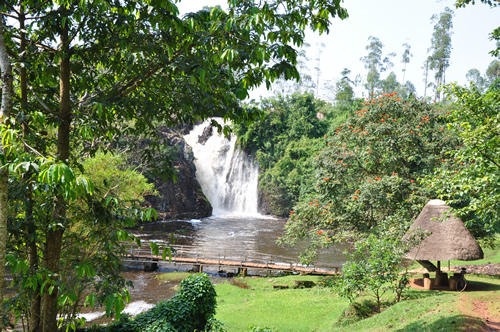
Ssezibwa Falls: The Ssezibwa falls are found in Mukono between the Kyagwe and Bugerere parishes. The waterfalls are an important cultural and spiritual site for the Baganda people and especially die-hard royalists. All Kings of Buganda have visited the Sezibwa falls to seek for blessings from their ancestors. Apart from the royals, hundreds of people come to a shrine on top of the falls to seek the blessings and favor from the gods.
Nkokonjeru Tombs: These tombs are found in Mbarara District in an area called Kakiika. It is the burial ground for two of the previous Omugabes (Kings) of Ankole and other royal family members. Rutahaba Gasyonga II and Edward Solomon Kahaya II are buried in the tombs while 9 other royal graves are positioned outside.
Nakayima Tree: This tree is found in the District of Mubende. It is believed to be over 400 years old and is one of the biggest trees in Uganda. Legend has it that the tree was planted by the wife to a certain Nduhura called Nakayima. People would go to the tree to seek blessings and favor from their gods as they dealt with the challenges of life. People still go to seek blessings from the tree to this day.
Katereke Prison Ditch: This ditch is a constant reminder of the brutality of some of Buganda’s Kings. Kabaka Kalema faced opposition from his siblings and decided to do the unthinkable. He captured all his brother and sisters – 30 in total and imprisoned them in a ditch until they all starved to death. The Katereke Prison Ditch is a reminder of this difficult time in the Buganda Kingdom and also the savagery Kabaka Kalema. Despite its connection with the brutality of the paranoid king, the site attracts many international visitors.
Itaaba Kyabanyoro: This site found a short distance away from Mbarara town. The site is important in the history of the Ankole Kingdom as the place where the last ruler (Known as Wamala) of the Bachwezi empire designed the sacred royal drum known as “Bagyendanwa”. The drum still exists to this day and is one of the revered cultural symbols of the Ankole kingdom.
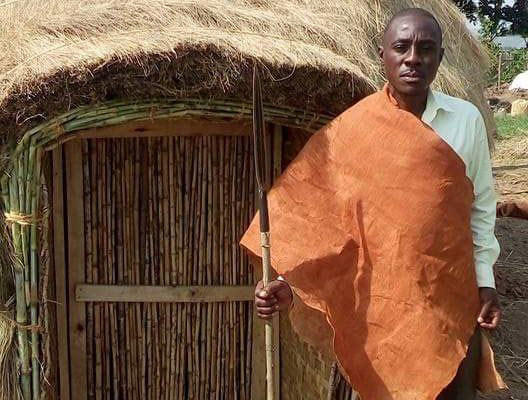
Nyero Rock Paintings: To see the Nyero Rock paintings you have to travel East of Uganda. The paintings are located eight kilometers away from Kumi town along Ngora road. The amazing paintings were left behind by humans living in the area during the Iron age. The paintings show several symbols including canoes and animals that once roamed the area.
Kanyange and Nnamasole Baagalayaze Tombs: These tombs hold the remains of the mother of Kabaka Suuna II who was buried at the Wamala tombs.
The Wamala Tombs: Apart from the Kasubi tombs, Buganda has other tombs for their earlier kings. The Wamala tombs holds the remains of Kabaka Suuna 11.
Igongo Cultural Centre: This is a privately owned cultural Centre found in Mbarara District along the highway to Kampala. The Centre is built on the grounds of the former palace of the King of Ankole. Mr. Tumusiime established this Centre to promote the culture of the people of Uganda and Africa as a whole. There is no better place to experience the culture of the people of Western Uganda than at the Igongo Cultural center
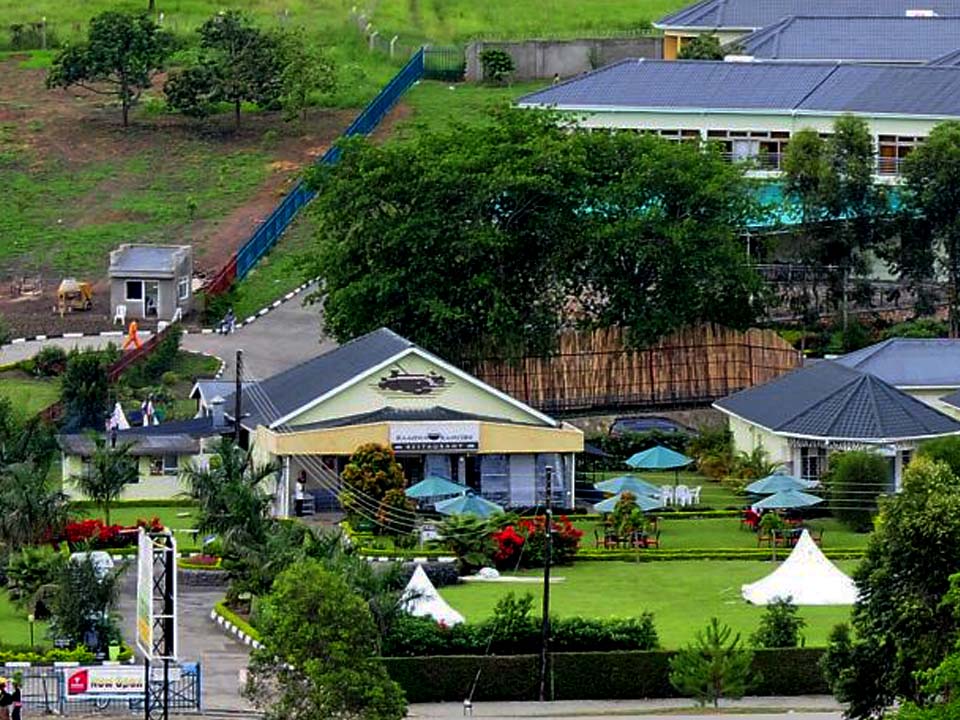
Ndere Troupe Cultural Center: This center is found in Ntinda, a suburb in Kampala. Ndere is got from a Kiganda word “endere” which refers to a flute. The Ndere Troupe Cultural Center is arguably the best place to experience the culture of Uganda as a whole.
Baha’i Temple: The Baha’i Temple in Uganda is the only one of its kind in Africa. It is very popular with both local and international tourists. The eye-catching temple is built on a large 30-hectare piece of land in Kikaya Hill (Kampala). It has beautiful gardens that are ideal for relaxation and meditation. The Baha’i temple is open to all religious groups. The temple is a unique piece of architecture with windows that can filter light coming from the sun. Visit this temple to learn about the Baha’i faith, pray or relax by the beautiful gardens that offer amazing views of Kampala city.