
RELIGIOUS TOURISM IN UGANDA

Religious tourism in Uganda : Religious tourism is a form of tourism that dates back to the medieval times which has with time evolved into two major forms of religious tourism with one commonly known as a pilgrimage and the other form as a branch of sightseeing which involves viewing religious monuments and religious artefacts. Religious tourism is also widely known by other names like faith tourism, church tourism, spiritual tourism and sacred tourism.
When it comes to a pilgrimage which is a religiously or spiritually motivated travel it will usually involve as aspect of faith, solitariness, silence in respect of holy and sacred spaces, rituals, penance, offerings and need for perseverance as it can sometimes involve the travel of long distances. Among the famous pilgrim sites are Kumbh Mela in India and the Mecca where Muslims are required to Hajj to Mecca at least once in their lifetime.
When it comes to religious sightseeing, it can be largely motivated by any kind of interest like architecture, art, history, religion and even personal ancestry.
Today, there has been a merge of pilgrimages and sightseeing religious tourism which is being termed as secular tourism. Here the tourists motives of travel are neither purely for leisure nor purely for faith, but a degree of compromise is applied to both. Here, tourist will travel mainly to spiritual hotspots and may practice or engage in some rituals such as channelling, levitation, prayer, hypnosis and even yoga and meditation.
While on you next Uganda tour, here are a some of the religious tourism sites you should explore.
Uganda National Mosque (The Gaddhaifi Mosque)
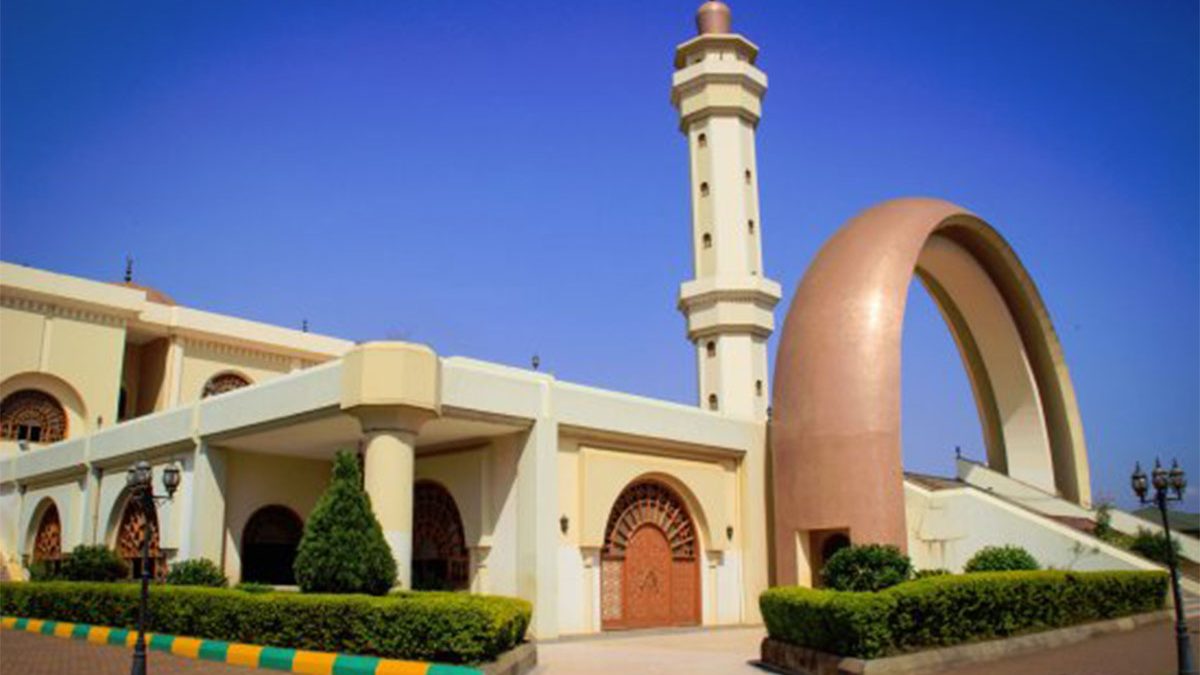
Built and completed in 2006, the Gaddhafi Mosque is the largest mosque in Uganda located on top of the Old Kampala hill. It was built by the Government of Libya under the rule of the late Muammar Gaddhafi from whom it acquired its original name. Today the mosque is called The Uganda National Mosque, a name that was attained after the death of former President Muammar Gaddhafi. The mosque is large enough to accommodate twenty-five thousand (25,000) people and is raised about 25 metres high giving you a 360-degree panoramic view of Kampala city. Its location is also where the British flag was first hoisted during the British Colonial Era. The tourist attractions at the site include the unique architecture, prayers, views of Kampala City, and meditation ambiance. What to expect during your Uganda safari to the Uganda National Mosque includes requirement to change clothes if you are a lady not wearing long covering clothes and a head veil or a man not wearing long sleeved clothes and a trouser. Changing clothes can also be got at the reception of the Mosque. Expect a charge of UGX 10,000 and a detailed guided tour of all the facilities, official rooms and hall on the site.
Kibuli Mosque
This mosque is famous for its history and architecture. The first mosque at the site was set up in the 1800s and the current mosque was established in 1951. The mosque is also built on a hill and its campus also houses a secondary school and a hospital.
Bahai Temple
The Bahai Temple also known as The Bahai Mother Temple of Africa is one of the nine that exist in the world and the only one in the African continent. It occupies more than 52 acres of land with a recreational garden that attracts many visitors for prayers, meditation and relaxation. The temple is also famous for its formidable architectural structure that is a marvel to look at.
Kigungu Landing Site
Kigungu landing site is considered to be the very first place to openly welcome Catholicism in Uganda. On the site you will find a brick monument representing the two French missionaries, Father Simeon Lourdel and Brother Amans who sailed across the Lake Victoria and docked on the Kigungu peninsular in 1879 and brought with them the ways of the Catholic Church and established a Catholic church in Kigungu Landing Site. Annually on the 17th of February about hundreds of pilgrims travel to Kigungu to celebrate the arrival of the missionaries and the catholic church. Tourist activities at the site will include pilgrimage, prayers, community visits, sightseeing, and the street is lined with souvenir shops where you can purchase local crafts.
Bishop Hannington Memorial Site.
This site is located in Mayuge district in Kyando village and is said to be the place where the first Anglican British Missionary, Bishop Hannington James together with about 48 of his African helpers where murdered on the 29th of October in 1885 under the orders of the then King of the Buganda Kingdom.
The memorial site which sits on about 220 acres of land, has a resort centre with accommodation rooms for pilgrims and tourists, and a commemoration church that hosts prayer celebrations and church services.
Uganda Martyrs Shrine Namugongo
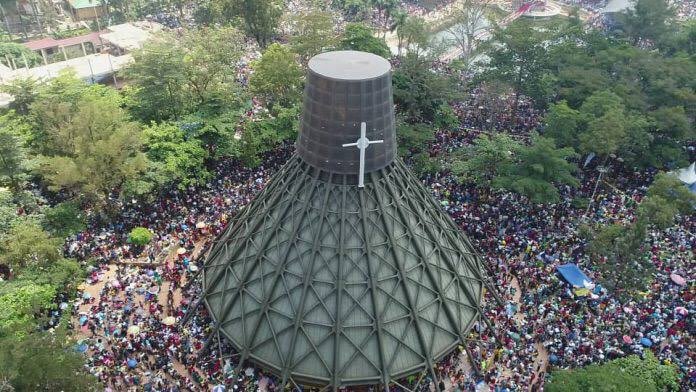
This is a very popular site in Uganda where Uganda Martyrs were burned alive because of their faith. The Shrine has several touristic facilities and services such as Martyrs monuments, the church of Uganda Martyrs Museum, recreation gardens and visitor interpretation facilities. The site also hosts the annually 3rd June religious pilgrimage that celebrate the martyrs that died for their faith and attracts over thousands of people each year.
Paimol Martyrs Shrine
The Paimol Martyrs shrine in North-western Uganda is a religious site that celebrates two young Acholi Catechists, Irwa and Okello, who were killed in 1918 for preaching and spreading the Christian faith in East Acholi region, Kitgum District. The site has a memorial church which celebrate the martyrdom of the young men every year on the 20th of October.
St. Mary’s Rubaga Cathedral
This is the oldest Roman Catholic Church in Uganda built by the French Catholic missionaries who were known as the White Fathers, who began construction to the beautiful architectural cathedral in 1914 and completed in 1924. The structure can accommodate about 5000 people. Situated on top of the Rubaga hill, the site also has beautiful recreation gardens with support facilities, and it is where the first African Catholic Bishop and Archbishop, Acrhbishop Joseph Kiwanuka, is buried. Tourist activities on the site include prayers, sightseeing, prayer celebrations, and quiet meditations.
St. Paul Namirembe Cathedral
This church is popularly referred to as Namirembe church. It is the biggest and oldest Anglican Church in Uganda and was founded in 1890 and rebuilt in 1892 to accommodate about 4000 people. However, the current structure at the site was established in 1915. The site has a very beautiful scenery and calm environment for meditations, prayer and wedding photography.
In conclusion, in Uganda is a growing tourism product among the other more progressive Uganda wildlife-based tourism industry and despite the adverse effects of the Covid pandemic, there is still hope that religious tourism in Uganda will return to its steady and progressive growth.