
Flamingos in Lake Nakuru National Park : In East Africa when you talk about flamingoes, you are definitely talking about Lake Nakuru National Park. This park is the flamingo’s hub in the region with over 10000 flamingos’ individuals making the lake their home, and in the breeding seasons this number is triple, when you visit the park your in a haven of flamingoes.
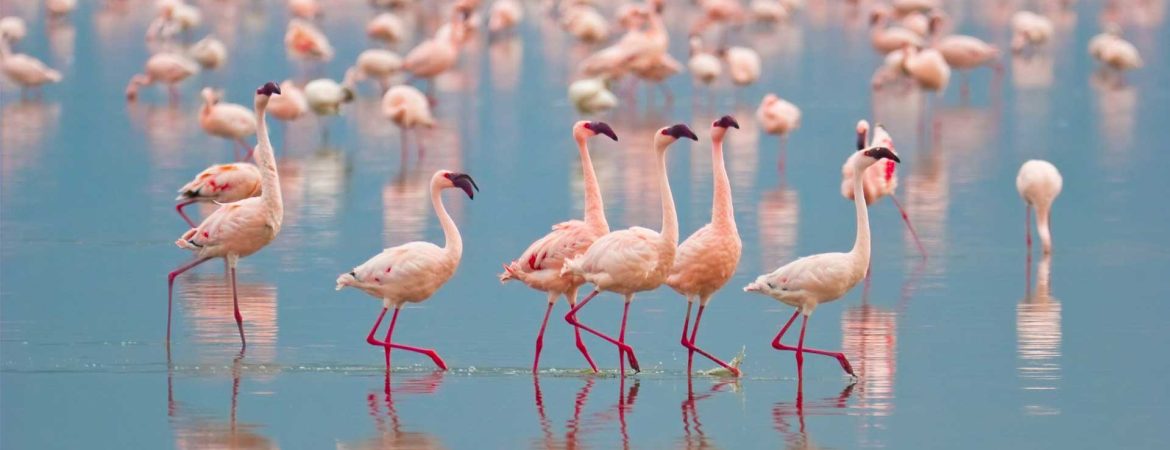
The flamingo’s scientific name is Phoenicopterus ruber from the Phoenicopteridae family and genus Phoenicopterus. They measure between 1.2-1.5 meters (3.9-4.9 feet) in length and weigh between 2-4 kg (4.4-8.8 pounds). They have distinctive pink feathers, which get their color from carotenoid pigments in the food they eat. Flamingos have a uniquely shaped beak, which is used for filter-feeding.
Flamingos inhabit shallow lakes, salt pans, coastal areas, saltwater and freshwater lakes. You will find them more in salt pans, which are shallow pools of saltwater. You will also find them in yestuaries, mangroves, and salt marshes, in wetlands too in marshes, swamps, and flooded grasslands. They are distributed in Africa, Asia, and Europe, with a global population of around 2-3 million individuals. As stated, above Lake Nakuru National Park in Kenya is one of the most famous flamingo habitats in the world.
More about the flamingo habitats, the shallow water is typically less than 1 meter (3.3 feet) deep with a great level of alkalinity that supports the growth of algae and small invertebrates. The muddy or sandy substrate allows them to easily walk and forage. This is because the flamingos need abundance of food to survive including small invertebrates, algae, and plankton.
Best example of a perfect flamingo habitat is Kenya’s Lake Nakuru National Park, that’s why it has all those flamingoes.
The flamingos are filter-feeders and feed on small crustaceans, algae, and plankton. Their uniquely shaped beaks are used to filter small particles from the water. These beautiful birds are highly social birds and live in large colonies. In these colonies the different individuals will mate with only one partner usually for their lifetime. Because flamingos are monogamous and form long-term pair bonds.
They breed throughout the year, but the breeding season peaks during the wet season; laying a single egg per clutch, which is incubated for around 24-28 days. The adult flamingos can live up to 20-30 years in the wild and slightly longer in captivity. They build nests on the ground using mud, sticks, and other plant material.
Flamingos are listed as Least Concern on the IUCN Red List and are threatened by habitat loss, pollution, and climate change. That’s the reason flamingos are protected in several national parks and protected areas, including Lake Nakuru National Park. Several conservation organizations, such as the World Wildlife Fund and the International Union for Conservation of Nature, are working to protect flamingos and their habitats.
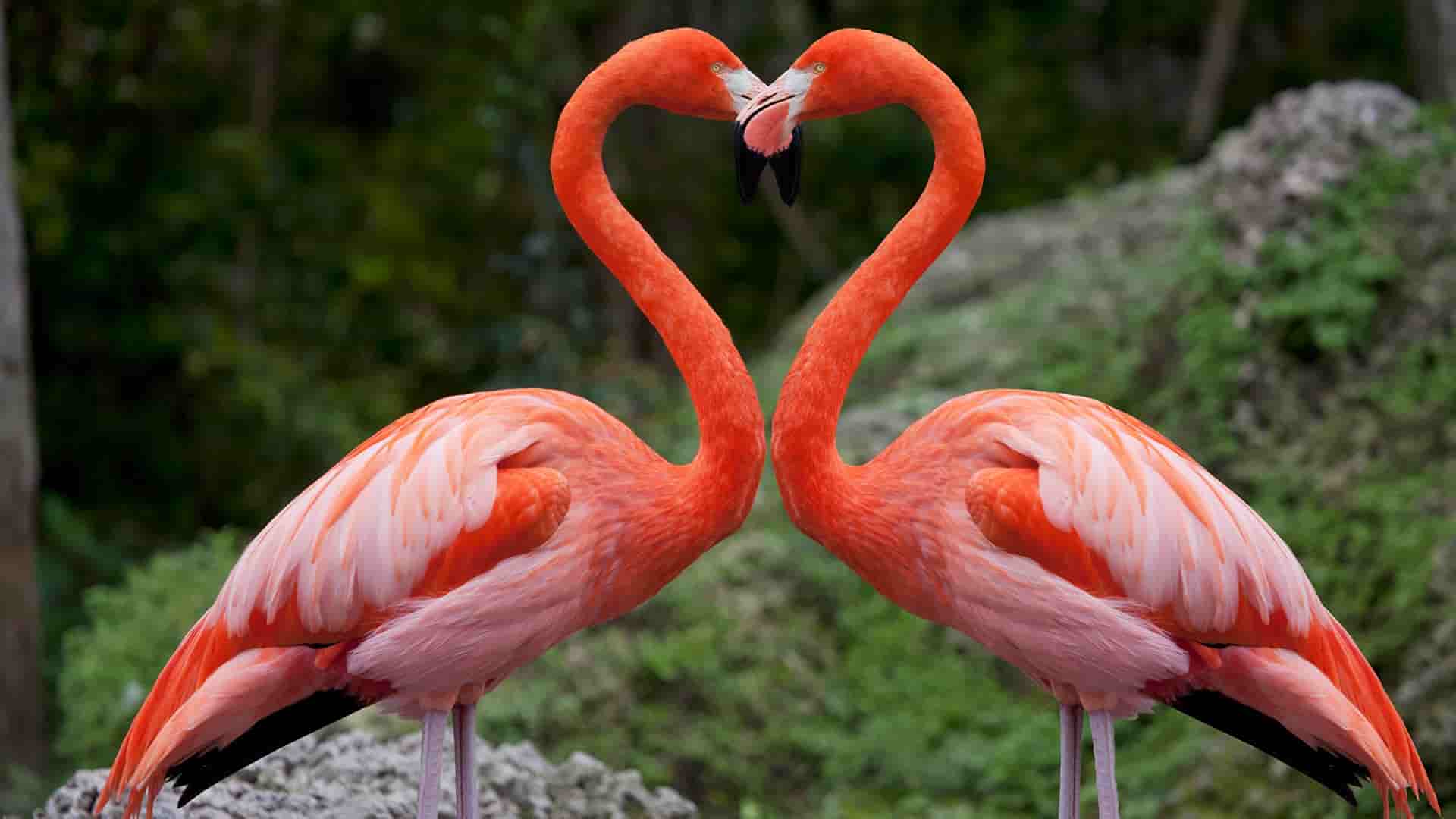
Lake Nakuru National Park is located in the Rift Valley of Kenya and covers an area of approximately 188 km² (73 sq mi). The park’s habitat is characterized by shallow lakes, salt pans, and grasslands. The flamingo population in Lake Nakuru National Park is estimated to be around 1-2 million individuals. The flamingos in Lake Nakuru National Park use the shallow lakes and salt pans as their primary habitat They feed on small crustaceans, algae, and plankton.
Any time of the year you plan to visit the flamingoes in Lake Nakuru National Park is the Ideal time. The park is open to the public all year round for visitors coming to see the flamingos and the rest of the bird population and also for game drives to see the animals and wildlife there in.