
Guidelines on how we should conserve and protect the Mountain Gorillas
Guidelines on how we should conserve and protect the Mountain Gorillas : Several videos have been watched on YouTube where tourists are seen getting very close to the mountain gorillas and also some of them being touched by the wild mountain gorillas. These videos have inspired many travelers to desire visiting the wild mountain gorillas which can only be located in East and Central Africa.
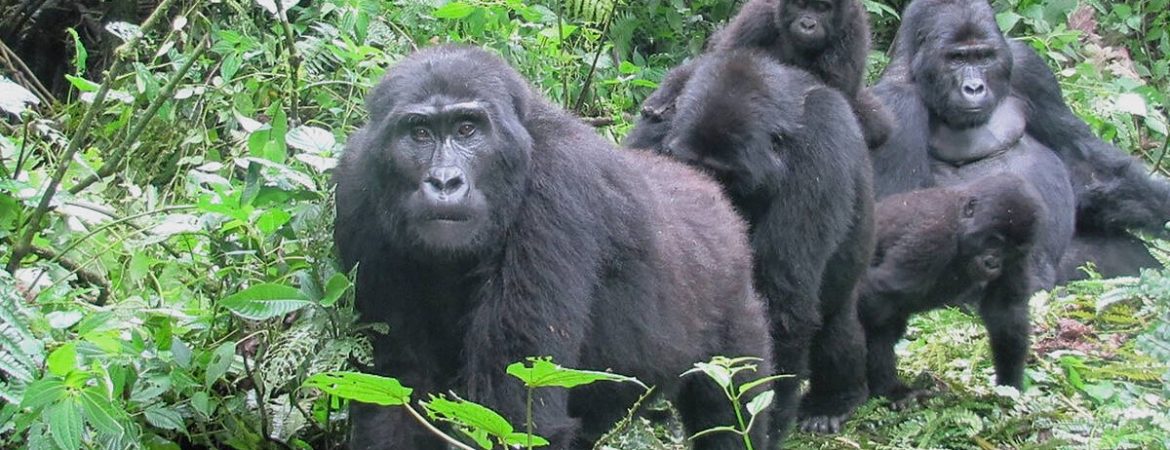
There are 4 major gorilla species in the whole world and 3 of these can only be found in Central and East Africa including the Western Lowland gorillas only found in the Democratic Republic of Congo, Mountain gorillas and Grauer’s Gorillas found in the 3 national parks of Virunga national park in Congo, Volcanoes national park in Rwanda, Bwindi impenetrable national park and Mgahinga national park in Uganda.
These mountain gorillas are endangered species and it is said there are about 1,000 remaining mountain gorillas in the 3 national parks of Uganda, Rwanda and Congo however, due to the massive conservation practises introduced by responsible governments for each countries that is the Uganda Wildlife Authority, Rwanda Development Board and Virunga with partnerships with different gorilla conservation organisations such as the International Gorilla Conservation Program (IGCP), Gorilla Doctors, World Wide Fund for Nature (WWF) and many other Non-government organisations including the Dian Fossey Gorilla Fund in Rwanda just to mention a few. These organisations have provided guidelines to tourists/visitors in midst of their desire to visit them to follow in order to protect and secure the future of the mountain gorillas to ensure long term survival of these endangered species.
The guidelines to conservation of mountain gorillas cuts across all people including the tourists, researchers, those who have already visited, those intending to visit and those looking to make a positive impact on mountain gorilla conservation, the Mountain Gorilla Veterinary Project has some of the guideline that will help to conserve the mountain gorillas following below;
Gorilla friendly pledge
This is an initiative introduced by the International Gorilla Conservation Program (IGCP) as an online awareness raising campaign aimed at encouraging all those planning to visit the mountain gorillas and even those who are not to pledge to observe gorilla tourism rules during treks and to share feedback on their trekking experience after the visit through the Gorilla Friendly Pledge website which is gorillafriendly.org.
While the desire to connect with one of our closest relatives sharing 98% DNA is innate, such close contact with this endangered species is not in the best interest of its conservation. So before visiting, make a pledge to conserve about the 4% of the mountain gorillas that die because of infectious diseases such as Flu, cold, scabies and also the Covid 19 virus. Disease transmission due to contact with humans is a very real problem for mountain gorillas, some of whom have become ill as a result of their proximity to humans. That said tourism and the work of scientists and researchers are absolutely vital to the species’ survival.
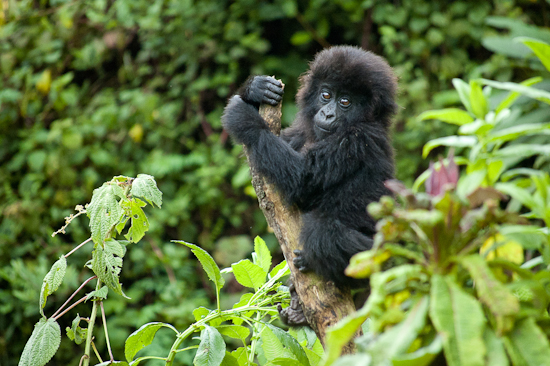
Conserve mountain by trekking in Rwanda, Democratic Republic of Congo or Uganda.
Gorilla trekking is once in a life time experience for any visitor because purchasing a gorilla permit is quite pricey – US$400 in Democratic Republic of Congo, US$700 in Uganda, and US$1,500 in Rwanda however by purchasing the gorilla permit to visit the mountain gorillas, you will be providing the economic incentive for the gorillas’ protection. This permits fees is for conservation and the communities that live around the forests gazetted for gorillas. Without gorilla tourism, mountain gorillas might have gone extinct.
The regions where mountain gorillas live are home to the densest human populations in Africa. Most of the people living in these areas are farmers, so land is critical to their livelihoods. However, the governments of Rwanda, Uganda, and DR Congo have kept the gorilla’s volcano habitat off-limits to agriculture in order to protect the gorillas, largely because the revenue gained through tourism outweighs the value of using the park land for other purposes.
Do not trek to see gorillas if you are sick
Due to the genetic similarity between humans and mountain gorillas sharing a 98% DNA, gorillas are susceptible to many of the same infectious diseases that affect people. Mountain gorillas are also immunologically naïve to some diseases, meaning they are particularly susceptible to certain human diseases because of their historic isolation from people.
Research conducted by the Gorilla Doctors and other scientists has proven that mountain gorillas have died as a result of infections that originated in people. Infectious disease, after trauma, is the leading cause of death in mountain gorillas. The most common infection is respiratory disease, which can range from mild colds to severe pneumonia. To protect gorillas from such infections, the national park authorities ask that anyone feeling sick or running a fever to not trek gorillas.
Wear a mask and other protective gears while trekking
The mountain gorillas are also at a high risk of getting Covid 19 virus so tourists are highly recommended to always wear your masks when trekking gorillas and those gears like footwear to protect the inhabitant of the mountain gorillas. Other related practices while trekking gorillas include;
- Avoid urinating in the park, always wait until you return from the hike. So you are advised to prepare before starting your hike
- Food must be eaten 500 meters away from the mountain gorillas.
- No smoking is allowed in the forest
- Non-essential personnel must remain at a long distance away from the Gorillas
- Human quarantine for those who wish to stay longer trekking
Minimum age of 15 years
The main reason why children below 15 years of age are not allowed is because children are more susceptible to a greater variety of communicable diseases. It is all about the physically fitness requirement to hike but disease prevention is most required.
Stay 10 meters away from the gorillas when you meet them
In order to reduce the risk of disease transmission and to avoid changing or disturbing the gorillas’ natural behaviour, the national park authorities and partners have established the rule of staying 10 meters away or 21 feet or more from the gorillas at all times. The gorillas themselves, especially infants and Juveniles, don’t know the rules and may approach humans, but tourists should make the effort to back away and avoid touching the animal if possible. The 10 meter rule should be observed at all times, even when gorillas leave the national park and venture on to property owned by tourist lodges and camps.
Donate to conservation organizations working to protect mountain gorillas.
One of the most effective ways to help mountain gorillas is to donate money to organizations working on the ground to conserve the species. Numerous organizations including Mountain Gorilla Veterinary Project in Rwanda, Uganda and Congo have spent decades finding effective methods for protecting mountain gorillas, and most rely on grants and donations to fund their work.
When donating your money to support any cause, it’s important to evaluate the organization you are considering supporting to determine how successful the group is in carrying out its mission. You should find the answers to questions like, “What methods does the organization use to accomplish its stated goals?” and “Does the organization have any data or statistics to show that its methods are having an impact?” An organization’s website and annual reports should provide this information, or you can always send an inquiry to their public information or development officer.
Funds collected from donators provides direct life-saving medical care to mountain gorillas in the wild, do research, provide anti-poaching done by the park rangers and trackers who are responsible for up to 40% of the growth of the human-habituated mountain gorilla population in the Virunga Massif over the last 10 years.
Do other activities in the parks in addition to gorilla trekking.
The vast majority of tourists who visit the national parks where gorillas live spend a day or two trekking gorillas and then leave. However, all of the gorilla parks offer other amazing wilderness experiences. As with gorilla trekking, the revenue earned through these activities further incentivizes the governments and local people to protect mountain gorilla habitat.
You can climb the active Nyiragongo volcano in Democratic Republic Congo – home to the world’s largest lava lake or hike extinct volcanoes in Rwanda and Uganda, such as the snow-covered Mt. Karismibi or the fluted peaks of Mount Sabyinyo and Muhabura. Both Rwanda and Uganda offer treks to see Golden monkeys, and in Rwanda you may also visit the gravesite and former research station of Dian Fossey.
Support local businesses and community projects around the national parks
As much effort as the governments and conservation organizations put into protecting the gorillas, the support of the local people surrounding the parks is vital to ensure the preservation of gorilla habitat and the conservation of mountain gorillas. The more that local people share in tourism revenue and benefit from non-profit and community efforts in the area, the more likely they are to want to protect the mountain gorillas.
Tourists can help by frequenting local restaurants, shops, and other businesses or by making contributions to community projects around the park. For example visitors can visit the Iby’wacu cultural village near Volcanoes National Park which employs former poachers as cultural interpreters and performers, Batwa cultural trail in Mgahinga national park and also Batwa community tours around Bwindi Impenetrable national park.
Do not buy products made with wild animal parts
Mountain gorillas are also a common target by poachers especially in Congo and Rwanda just animals living in the national parks. Poachers mostly set snares to catch gorillas especially the infant gorillas to bring home to their families for food or cultural beliefs.
Furthermore, poachers’ presence in the forest disturbs the environment and increases the risk of zoonotic disease transmission. While the main purpose of poaching is to obtain bush meat, wild animal skins, bones, and ivory may be used in crafts and other items sold to tourists. If you have any doubt about a product’s origins, don’t buy it. And certainly, in the rare instance you may see or hear of someone selling a live wild animal, report it to the national park authorities.
Spread the word about mountain gorilla conservation.
Anyone can make a difference for the gorillas by telling their friends, family, and colleagues about the mountain gorillas and the efforts being made to save them especially those who have already visited the mountain gorillas. Remember that even though mountain gorillas are critically endangered, their story is a positive one! Mountain gorillas are the only subspecies of non-human great ape growing in number.
Fewer than 250 animals were counted in the mid-80s when Dian Fossey was researching the gorillas but today the population numbers nearly 800 animals. This species has a fighting chance for survival if we continue to work to address conservation challenges.