
Why do you find Zebras in East Africa? Zebras in East Africa are found in found countries Kenya, Tanzania, Rwanda and Uganda. And this is due to the assortment of the geographical, vegetation and climatic conditions that support the livelihoods of these animals, the zebras. The East African climate and temperatures are warm with a distinct wet and dry seasons that allow zebras to live, thrive and multiply.

The region’s rainfall patterns also with two rainfall seasons greatly support the growth of grasses plus other vegetation that zebras typically rely on for food.
The Zebras live in savannah grasslands and acacia woodlands in the east African region where they make their home, mate and also feed. Usually, the zebra communities are found near water bodies so they can easily have access to water.
Zebras are migratory animals and this so evident in Kenya and Tanzania, where the zebras are part of the great wildebeest migration moving through the mara river with other animals like the wildebeests, impalas, antelopes and others in search for better mating grounds and food.
Zebras are herbivores feeding on grasses, leaves, and fruits and anything natural in the vegetation. The Zebras’ grazing pattern has the Zebras using their sharp teeth and tongue to clip and tear grasses.
On the other hand, the Zebras are food for the lions, leopards, hyenas and the like, so you will find them running away from such animals like that, but they live in harmony the other smaller animals that are also herbivores.
Zebras in East Africa can be found in several national parks that include but are not limited to:-
Serengeti national park, lake manyara national park, tangerine national park and others in Tanzania, Maasai mara national reserve, tsavo national park, lake Nakuru national park, sambaru national park, Amboseli national park and others in Kenya. Lake Mburo national park, Queen Elizabeth national park, Murchison falls national park, kidepo national park and others in Uganda; and Akagera national park in Rwanda.
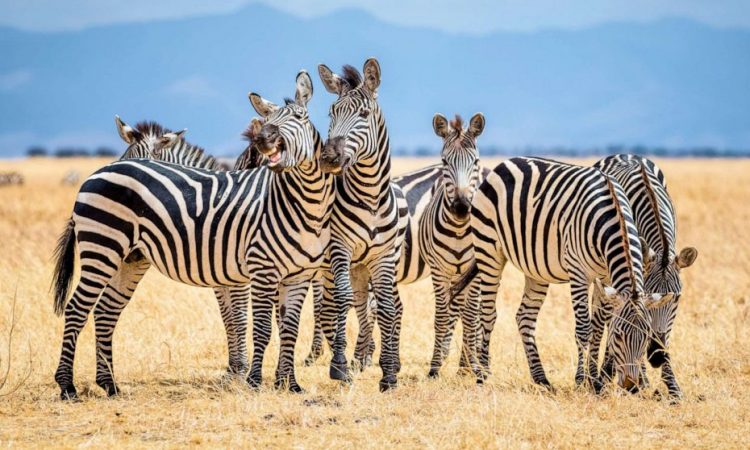
The Zebras are unique and pretty distinct in their appearances striking black and white stripes and the winner is each zebra’s striping pattern is unique just like human dental formula or fingerprints. Their black and white coats somewhat help them to camouflage in their grassland habitats as they hide from prey.
The Zebras are average height and sized animals standing at 76-122 cm tall at the shoulder. They live in large herds led by a dominant male like in most animal settings. The Zebras have a very well-established social hierarchy within their herds that is followed by all the individuals in the herd. They communicate using several vocalizations, body language, and scent marking.
The Zebras will mate and breed all throughout the year and the females have a gestation period of about13 months. They give birth to a foal per birth that can already stand and walk at birth. Zebras in the wild, with all factors considered constant, live up to 20-30 years and their average lifespan is around 15-20 years.
They are considered vulnerable animals and are listed as vulnerable on the IUCN Red List. They are vulnerable due to a number of factors that include but not limited to due to habitat loss, fragmentation, human activity, degradation and other factors.
On top being prey for the bigger animals in the wild the Zebras the Zebras are also at risk of being poached by humans, especially in parks where the zebra game park is close to human communities.
You can organize your Zebra tour anytime you are ready to have it. Just contact your tour operator for more information and details.