
Shoebill Stork
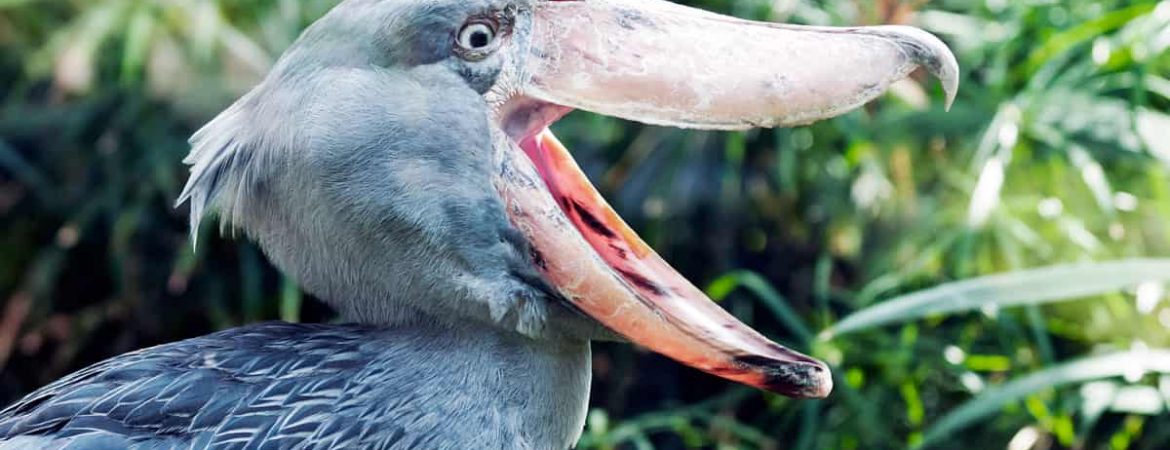
Shoebill stork is a magnificent, unique, prehistoric, ancient-looking bird that is sought after by visitors in Africa specifically Uganda. Shoebill stork is also referred to as the king whale-head because of its head size and the Arabs used to call it (Abu Maruk) which means the father of the shoe and another one could call it a flying shoe because of its unique bill.
Uganda is home to a variety of bird species and wildlife and is the best destination I East Africa where you can see the shoebill stork while on a safari. The shoebill stork can be sighted in different areas in Uganda including Mabamba swamp along lake Victoria close to Entebbe or Kampala, Murchison falls national park along the banks of the Nile River in the Delta area, Ishasha sector in the southern end of Lake Edward in Queen Elizabeth national park, Lugogo swamp in Ziwa Rhino Sanctuary, Lake Mburo national park, Semliki national park close to lake Albert and also in Nabajuzi swamp in Masaka district. Due to peace, safety, security and easy accessibility of the birding locations, Uganda is considered the best destination in Africa for sighting the shoebill stork bird. Besides being sighted in Uganda the shoebill stork can also be viewed in Kenya, south western Ethiopia, Northern Cameroon, Botswana, Upper Congo River, Sudan, and Zambia among others.
Uganda is a home of different bird species apart from the shoebill stork that inhabits in the national parks including Queen Elizabeth national park with over 600 species, Bwindi impenetrable national park with over 350 species, Murchison falls national park with over 450 species, Lake Mburo national park with over 350 species, Rwenzori national park with over 217 species, Kidepo national park with over 450 species, Mount Elgon national park with over300 species, Semliki national with over 400 species, Mgahinga national park with over 115 species and Kibale national park with over 370 species, some these bird species are endemic to the Albertine rift hence cannot be found anywhere which make Uganda a birders paradise in Africa to the birding safaris because it is a habitat of half of Africa’s bird species.
What makes the Shoebill Stork bird Unique
Shoebill stork is a large outstanding bird with a shoe-shaped bill that is mostly found in the Eastern parts of Africa and is always sought after by the bird lovers on a safari in Africa especially in Uganda.
It was named the shoebill stork because of its shoe-like bill. An adult shoebill stork has feathers that are mainly grey in color while the juveniles are browner in color; the shoe bill stork grows up to 150cm tall in height, 14 pounds in weight, 24cm in length, 20cm in width and 230cm to 260cm wingspan. The male shoebill storks are a little larger and have bigger bill than the females and the bill of a mature adult is about 9 inches long, 4 inches wide with a hook at its tip.
Breeding of Shoebill Storks
The prehistoric-looking shoebill stork bird is a solitary creature with territories and can be so protective of its territories and forms monogamous relationships during the mating season which takes place between April and June. The shoebill stork can live between 45 to 50 years or more and make their nests on the ground where the eggs hatch from. The female shoebill stork lay two eggs and during the incubation process, both the male and female parents share the incubation duties for one month before the chicks hatch. After hatching the female or mother feed the chicks for one to two months before they adapt to feeding themselves.
What the Shoebill Storks Feed On
The shoe bill storks in Uganda are found along the lakes and in the swamp areas hence referred to as swamp specialists. The shoe bill storks can stand easily on floating vegetation while hunting and they survive on food in water including lungfish which is their main diet, frogs, lizards, the baby crocodiles, water snakes, puddle fish, cat fish among others. Because of the sharp edges on their wide bill it helps them to feed on water animals. Although the shoebill storks are water birds, they tend to be nocturnal. The shoebill stork bird doesn’t have webbed feet but they can still have the ability to stalk the prey in water because they stand still for long periods awaiting the movements of the prey and then strike at a high speed.
When the shoebill stork is flying, they look beautiful while in the air because they have a wide wingspan with heads and necks drawn back. The shoebill stork seems inactive or slow while moving on the ground and tend to act like statues because they stand still for a long time but are graceful in the air and when attacking their prey they pull back their wings and then approach their prey in a way demonstrating their strength.
Destinations where the Shoebill Stork can be sighted in Uganda
Mabamba swamp, its located west of Entebbe or Kampala on the northern shore of Lake Victoria it’s a Ramsar site with thick marshes of papyrus, water lilies, and wetland grasses. Mabamba swamp is one of the best and most convenient places where you can see the elusive shoebill stork because it can easily be accessed by either road or boat tour across Lake Victoria where you will be able to see other bird species. At Mabamba swamp birding is done from a motorized wooden boat ride through the trails in the thick marshes of papyrus reeds where you will see the shoebill storks when they are stalking their prey which includes the lungfish, mudfish, frogs among others and other bird species like Swampy flycatcher, Winding cisticola, malachite kingfisher, black-headed weavers, yellow-billed duck, long-toed lapwing, red-billed fire finch among others because the swamp is a home of about 300 bird species.
Mabamba swamp is said to be a home of about 12 shoebill storks and the best time to see them is early morning at around 7am before there is more fishing activity in the swamp. Lungfish is the favorite food for the shoebill storks and also the most sought after fish by the local fishermen who had a superstition long ago that seeing a shoebill before fishing was bad omen and resulted in a poor catch that day, therefore, hunted, killed and also sold them and their eggs to the traders which led to the decline of the shoebill stork in the wetland. However after designating the Mabamba swamp a Ramser site in 2006 it provided protection to the shoebill stork and helped the fishermen to understand the importance of this sought after bird in Uganda, nowadays some fishermen have been trained in guiding and birding, some rent out their boats to bird watchers so as to earn money hence protecting the shoebill storks.
The shoebill stork tour at Mabamba swamp starts early in the morning in a motorized wooden boat which carries three people for easy bird watching because the shoebill storks usually hide in the water weeds to fee on the ling fish, bird watching tour usually takes around three hours in the swamp depending on your luck of sighting the shoebill stork which makes your Uganda safari more interesting.

Lugogo swamp in Ziwa Rhino Sanctuary, Ziwa Rhino sanctuary is located in Nakitoma village, Nakasongola district north of Kampala along Kampala-Gulu highway on the main road to Murchison falls national park. Ziwa rhino sanctuary is the only destination where the endangered Rhinos are found. The shoebill stork bird can be sighted when you go on a morning safari that starts at 6:00 am on a boat ride through the trail to Lugogo swamp, other birds will also be viewed including African cuckoo, Blue-spotted dove, White-crested Turaco, Ross’s Turaco, Barbets, Palm-nut vultures, Speckled breasted woodpecker among others which gives you a great experience on the safari.
Murchison Falls National Park, Murchison falls is a home of over 450 bird species which can be viewed on a boat ride on the Nile delta, many visitors in Murchison Falls national park usually take a boat ride on the top of the Falls while few visitors lake a boat ride down on the Nile to the delta area where the Nile flows or merges into lake Albert where the shoebill storks will be sighted. The boat safari in Murchison falls is best done in the morning in a motorized boat on River Nile and takes around four hours, the shoebill stork will be viewed standing still looking for fish to feed on which will make your safari memorable since most birders love to see this prehistoric looking bird.
Semliki Wildlife Reserve, Semliki national park is a great destination for the shoebill stork and other bird species including blue breasted bee-eater, blue-headed caudal among others and the unique shoebill stork which are seen feeding on the shores of Lake Albert and the swampy areas where the shoebill stork stay and visitors can see this magnificent ancient bird on a motorboat ride on Lake Albert.
The shoebill stork can also be sighted in Lake Mburo National Park that is located in western Uganda in the Mbarara district and Nabajuzi swamp in Masaka district. The shoebill stork is the most sought after bird in Uganda that can be sighted by birders any time throughout the year by on a safari in Uganda, visitors can also take part in other safari activities besides bird watching like gorilla tracking in Bwindi impenetrable national park, chimpanzee tracking in Kibale national park among others which give you wonderful and adventurous safari experiences with lifetime memories.